WHO Report Brings Social Connection Into the Public-Service Conversation
The commission’s findings put loneliness and opportunities for connection on the public agenda.
The report
The World Health Organization’s Commission on Social Connection reported in June 2025 that loneliness affects about one in six people worldwide. Its global assessment places social connection within a wider discussion of well-being and the conditions in which people live.
Different experiences
The commission addresses social isolation and loneliness as related but distinct experiences. The release is an international assessment; it cannot establish how an individual feels from their living arrangement or how often they attend an event.
A community reporting question
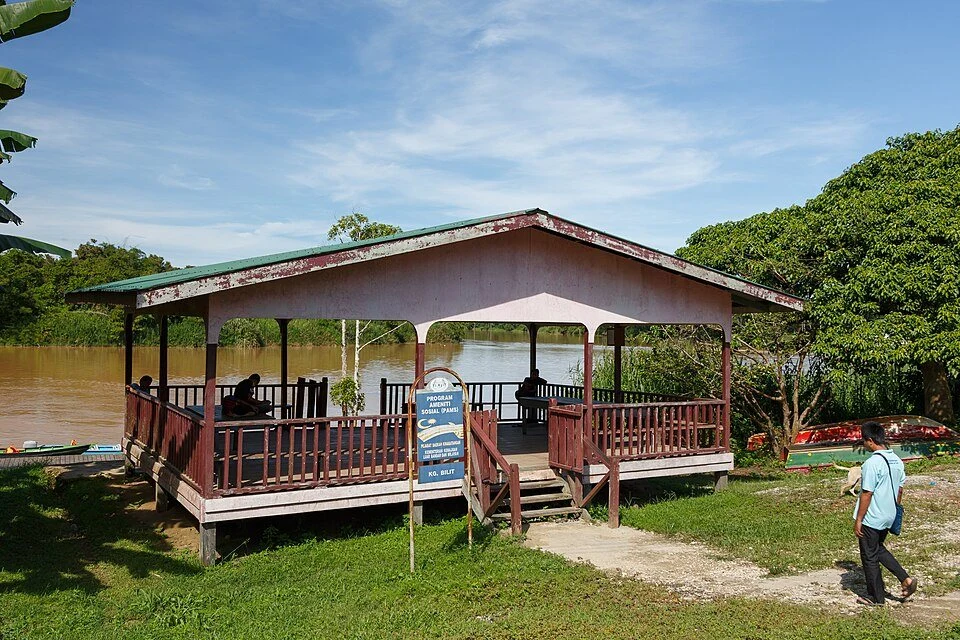
As editorial context, a community space can be physically open yet difficult to use. Timing, transport, cost and the way newcomers are welcomed are useful questions for local reporting. A meeting-place photograph shows a type of shared setting, not evidence of a successful intervention.
Limits of this summary
The linked WHO report contains the evidence and recommendations behind the release. This article summarizes a public-policy discussion and provides no diagnosis or treatment advice. A global estimate should not be used to label a particular neighbourhood or person.
Background and interpretation. The following sections add editorial explanation to the dated report. Hypothetical examples are illustrations, not newly reported events or interviews.
A public issue with an individual experience
A global estimate can identify the scale of a concern without telling us how a particular person feels. This distinction is especially important in a story about loneliness. A person's living arrangement, attendance at an event or visible number of contacts is not enough to establish their subjective experience. The report brings social connection into public discussion, but its findings should not be converted into casual labels for individuals. A respectful explanation keeps the population-level evidence and individual experience related but separate, avoiding assumptions based on a photograph or a short description of someone's routine.
Why related terms should remain distinct
Social isolation and loneliness can appear together in a public discussion, but the report treats them as concepts that need careful understanding. An informed reader should check the definitions rather than assume the terms mean precisely the same thing. This is more than a wording preference. A measure based on one concept should not automatically be used as a measurement of the other. The distinction also affects how a proposed response would be evaluated. Before claiming that an activity changed an outcome, a clear account would specify which outcome was actually measured and how the assessment was conducted.
A gathering is an activity, not a guaranteed result
Creating a meeting, club or shared space describes an opportunity or an activity. Demonstrating an effect on participants' experience requires additional evidence. This does not make community activities unimportant; it makes the claim about their results more precise. An editorial inquiry could ask who attended, whether people returned and what the evaluation actually measured. Those are different questions from the existence of an event. The expanded article offers this distinction as a way to assess public claims, not as a finding that a particular gathering did or did not improve anyone's health or well-being.
A hypothetical newcomer at a community event
Imagine a fictional person attending a local event for the first time. The building is open, but the person is uncertain where to go or whether they are expected to join a group. Another fictional attendee may already know the organizers and find the same event straightforward. This example illustrates a practical question about welcome and participation. It does not diagnose either person's experience or claim that the report studied this scenario. It shows why a count of places or events cannot, on its own, describe the quality of every encounter occurring within them.
Looking at the practical route to participation
An editorial analysis of a community opportunity might examine information, timing, transport, cost and the way newcomers are received. Each is a question to investigate locally rather than an obstacle that should be assumed to affect everyone. The value of this approach is that it turns a broad ambition into observable parts of a service journey. It also allows for different preferences and circumstances. A response that suits one group should not automatically be described as universal. Understanding participation requires listening and evidence, not merely inferring needs from age, address or another broad category.
Association is not an individual prediction
The WHO release discusses relationships between social connection and health-related outcomes. Such findings should not be transformed into a precise prediction for one reader. A population association and an individual prognosis are different kinds of statements. This article therefore summarizes the public-policy relevance without offering a diagnosis, treatment plan or personal risk calculation. The distinction protects the meaning of the research. It also prevents a public-interest story from implying that one behaviour guarantees an outcome or that a person is responsible for every difficulty described by a broad statistical relationship.
What evaluating a local response would involve
A credible evaluation would identify the intended population, the proposed outcome and the period over which it was assessed. It would explain whether the evidence concerned attendance, reported experience or another measure. The result should be described in those terms. A successful turnout, for example, should not be silently promoted into proof of every broader ambition associated with the programme. This is an evaluation framework, not a conclusion about a named initiative. It helps readers appreciate real activity while keeping the claims about its consequences proportionate to the information actually collected.
Images should not stand in for testimony
The archive meeting-place photograph supplies a visual reference for a shared setting. It does not demonstrate the experience of its users, the success of a programme or the condition of the people included in the report. Nor does this article invent an interview to make the issue feel more personal. The story can be accessible through clearly labelled examples and an explanation of the evidence. Maintaining that boundary is particularly important for a subject involving private feelings, where an image of someone alone or in a crowd could otherwise invite an unsupported interpretation.
A constructive reading of the report
The report's public value lies in bringing attention to social connection while making room for careful definitions and evidence-based discussion. The expanded explanation adds questions about participation, service design and evaluation. It does not claim that one model of community life is right for everyone or that attendance at an event establishes a medical outcome. Readers interested in the source's findings should consult the linked report and distinguish them from the editorial examples here. That approach allows a broad concern to become a more thoughtful conversation about opportunities for connection without reducing individual lives to a simple label.
Participation should allow for different preferences
A community opportunity should not be evaluated by assuming that everyone wants the same kind or frequency of contact. A careful inquiry would define its intended outcome and make room for differences in experience. This is a public-service reporting principle, not a clinical judgment. It helps keep the conversation respectful: opening a shared setting can be described as an activity, while any claim about personal experience needs evidence suited to that claim rather than an assumption about attendance.
Publication dates and statistical reference periods may differ. Figures are attributed to the linked source. Archive images provide context and do not document the reported event.
Source & verification
Primary source: WHO — 2025-06-30. Read the original for definitions, methodology and subsequent revisions. The source organization does not sponsor or endorse this publication.
 ITU Reports Wider Internet Access, With Two Billion Still Offline
 ILO Outlook Separates Stable Unemployment From the Quality of Work