UNHCR’s 2025 Review Records 117.8 Million Forcibly Displaced People
The annual review distinguishes forced displacement from other forms of movement.
The annual picture
UNHCR’s Global Trends 2025 figures, released in June 2026, put forced displacement at 117.8 million people at the end of 2025. The total describes people displaced by persecution, conflict, violence, human-rights violations or events seriously disturbing public order.
Categories are not interchangeable
The data distinguish people displaced within their own country from refugees and other populations outside their country. Not every displaced person has crossed a border. Comparing totals requires attention to the categories and the way overlapping populations are counted.
Keeping people in the story
As editorial context, statistical reporting should preserve the difference between a population total and an individual experience. A person’s route, documents or current needs cannot be inferred from a global count. Clear labels help readers avoid turning a complex situation into a stereotype.
Reference date and photograph
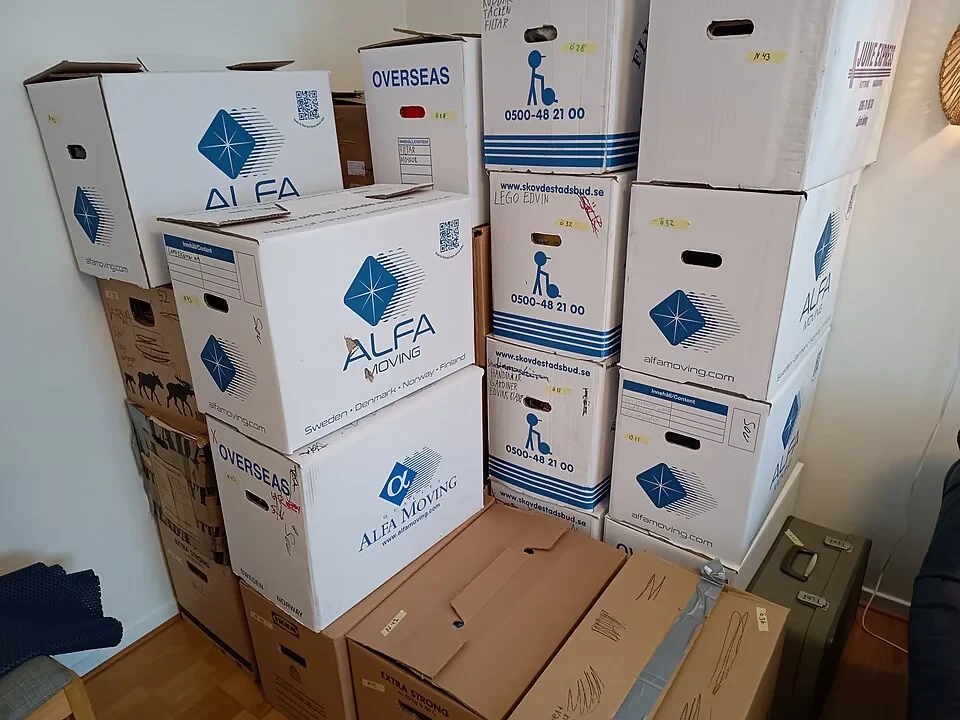
The figures describe the end of 2025, not a live total. Later UNHCR releases may revise the picture. The archive moving-box photograph is a neutral illustration of relocation and does not depict refugees, displacement conditions or a documented humanitarian operation.
Background and interpretation. The following sections add editorial explanation to the dated report. Hypothetical examples are illustrations, not newly reported events or interviews.
A large total contains different experiences
Forced displacement is not one identical journey repeated many times. The total summarized in the original report brings together categories that require careful definition. Some people remain within their own country, while others cross a border and fall within different statistical or legal frameworks. A reader should not infer an individual's status from the aggregate. The report's categories make it possible to describe a broad situation, but they do not erase differences in personal history, present circumstances or the evidence needed to understand a particular case.
A population at a date is different from movement during a year
An end-of-year total describes a population at a reference point. It is not automatically the number of people who moved for the first time during that year. A measure of new displacement or a measure of returns would answer another question. This distinction between a stock and a flow is essential when reading headlines about movement. Adding or comparing figures without identifying which type they represent can create a misleading narrative even if the individual numbers were accurately copied. The reference date should therefore travel with the figure whenever it is summarized.
Why overlapping categories need careful treatment
A broad displacement account can involve categories whose relationships are not obvious from their names alone. Readers should check how the source handles overlap before adding subtotals to create a new overall number. A total produced by a statistical agency may already account for relationships that a simple sum would miss. The safe analytical approach is to preserve the published definitions and arithmetic rather than reconstruct them from isolated headlines. This article explains that reading principle; it does not produce an alternative global estimate or assume that every category can be combined without adjustment.
A hypothetical example about changing totals
Imagine a fictional population in which new displacement occurs while other people return, settle elsewhere or move between statistical categories. A change in the total would reflect more than one process. A smaller end-point number would not prove that nobody experienced new displacement during the period. Nor would a larger total identify the circumstances of every additional person. The example illustrates why a trend needs a fuller explanation than the direction of one line on a chart. It is a reasoning aid, not a description of a particular country's record or an undocumented movement event.
A border is a geographic fact with additional context
Crossing a border can change which institutions and reporting frameworks become relevant, but a map alone does not establish a person's legal situation. That requires evidence appropriate to the jurisdiction and circumstances. A careful news account can explain the difference between internal and cross-border movement without making individual determinations. It should also avoid treating all migration as forced displacement or every border crossing as the same kind of event. Clear terminology protects the meaning of the global figures and reduces the risk of assigning an unsupported label to people based on where they appear in a photograph.
Looking at services without assuming a single pathway
Questions about housing, education, work and public services can be relevant to understanding the experience of displaced people. However, those questions need local evidence rather than a universal narrative derived from the global total. The route to a service may differ by location, programme and individual circumstance. An editorial inquiry can ask how information is communicated and how access is measured without claiming that every person faces the same obstacle. This approach keeps the public-service dimension concrete while recognizing that a statistical category is not a complete account of a person's daily life.
What a claim of a durable outcome should explain
A statement that a response produced a lasting result needs a definition of that result and an appropriate period of observation. Counting a movement, an administrative decision or a service contact would not necessarily establish the same outcome. Readers can ask which event was recorded, whether the population was followed over time and what remains unknown. This is an evaluation framework rather than a judgment on a named operation. It helps distinguish an important activity from a broader claim about its consequences, allowing progress to be described precisely instead of through language that exceeds the supporting evidence.
Reporting without borrowing an unrelated person's story
The moving-box photograph is a deliberately limited reference image. It does not depict refugees, a border crossing or a documented emergency. Its role is to suggest the general idea of relocation while the caption prevents that suggestion from becoming a factual claim. The same care should apply to writing. This article does not invent a displaced family or assign motives to anonymous people. A global story can remain understandable through definitions and clearly labelled examples, while preserving the dignity and variety of the individuals represented in the underlying statistical record.
What remains useful after the release date
The June 2026 release discussed here describes an end-2025 reference point. Later reports can provide a different picture and should be read with their own periods and definitions. The lasting value of the expanded explanation is a method for interpreting those updates: distinguish populations from movements, preserve category relationships and avoid turning a change in a total into a single causal story. The linked source remains the basis for the dated figures. This article adds context for reading them, not a live population tracker or a guide to an individual's legal rights or status.
One person is not a statistical pathway
A statistical category can change while a person's broader history continues. Reporting should therefore avoid presenting an administrative transition as a complete description of someone's circumstances. The public record can explain how a total was compiled, while an individual account requires appropriate evidence and consent. Keeping those forms of information separate allows both to be useful. It also prevents a change in terminology from being mistaken for proof that every practical concern associated with displacement has been resolved.
Publication dates and statistical reference periods may differ. Figures are attributed to the linked source. Archive images provide context and do not document the reported event.
Source & verification
Primary source: UNHCR — 2026-06-11. Read the original for definitions, methodology and subsequent revisions. The source organization does not sponsor or endorse this publication.
 ITU Reports Wider Internet Access, With Two Billion Still Offline
 ILO Outlook Separates Stable Unemployment From the Quality of Work