WFP Mid-Year Outlook Highlights Acute Hunger and the Gap in Resources
The mid-year assessment identifies continuing pressure on food-crisis responses.
The assessment
The World Food Programme’s July 2026 mid-year outlook says 266 million people across food-crisis countries face acute hunger. The agency identifies conflict as the main driver, compounded by economic shocks and climate risks, while humanitarian needs continue to exceed available funding.
A defined population
The estimate concerns acute hunger in food-crisis countries. It is not interchangeable with a worldwide measure of all food insecurity, poor diet or undernourishment. Those indicators can cover different populations and use different methods.
Why the denominator matters
As editorial context, a food-price story and a humanitarian-needs assessment answer different questions. A household’s shopping experience does not by itself establish a crisis classification. Reporting is more useful when it identifies the assessment period, geography and measure before comparing headline numbers.
What the image represents
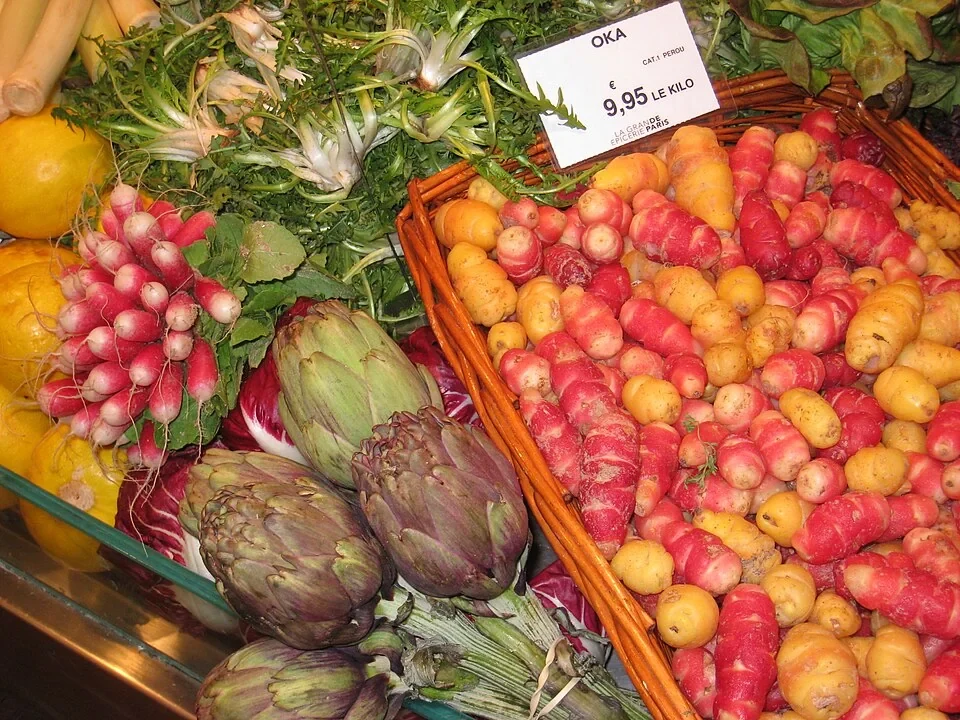
The linked outlook explains the assessment and response priorities. This summary does not make a claim about conditions in a particular shop. The archive grocery photograph illustrates food retail and is not evidence of the communities or assistance operations discussed in WFP’s report.
Background and interpretation. The following sections add editorial explanation to the dated report. Hypothetical examples are illustrations, not newly reported events or interviews.
Several food-related measures can coexist
Food reporting becomes confusing when hunger, food insecurity, diet quality and a household's shopping costs are treated as interchangeable. Each measure can describe an important part of the picture while using a different population and method. The WFP outlook discussed here concerns a particular assessment of acute hunger across food-crisis countries. That scope should remain visible when the number is repeated. It should not be presented as a universal count of every person experiencing difficulty with food, nor should a different indicator automatically be treated as evidence that the original assessment was wrong.
A mid-year assessment has a particular purpose
An outlook produced during a year draws together information for a specific period and planning context. It is not the same as a final historical account of every outcome during that year. The July publication date helps readers understand where the report sits in that sequence. Later evidence may alter an assessment, and different editions may reflect changed coverage or conditions. Keeping the edition label is therefore essential to a fair comparison. A newer article that explains an older outlook should not quietly convert its figures into a claim about conditions on the day of republication.
Why the covered geography matters
A count covering food-crisis countries is not directly comparable with a worldwide total unless the relationship between the two is explained. The set of places assessed and the availability of data can affect the meaning of the headline. This is a general principle of reading humanitarian statistics: identify the geography before treating a number as a global census. It also helps distinguish changes in conditions from changes in coverage. A useful follow-up would ask what the assessment included and whether a later comparison used a sufficiently similar scope to support the conclusion being drawn.
Needs and assistance are different sides of a response
The number of people assessed as facing a problem and the number reached by a programme are not the same measure. A response may also use different definitions of reach, timing or type of support. Readers should therefore avoid subtracting two headline totals and presenting the result as a precise measure of unmet need without checking their compatibility. The distinction is practical as well as statistical. An assessment describes a situation, while a delivery record describes an activity. Understanding how the two relate requires information about who was included, what was provided and during which period.
A hypothetical example about changing prices
Imagine two fictional households facing the same increase in a food price. Their ability to respond could differ because of income, other commitments, access to alternatives or the timing of their resources. The shared price change would not establish an identical level of need. This example illustrates why a retail observation cannot stand in for a full household assessment. It is not a claim about a particular population in the WFP report. It shows the importance of separating a visible pressure from the wider evidence needed to understand how that pressure is experienced.
Multiple pressures do not establish one simple causal chain
The source discusses conflict, economic shocks and climate risks. An analysis of how those pressures interact would need to identify the place, period and mechanism involved. Listing several plausible influences is not the same as measuring their individual contributions. A careful story distinguishes the agency's assessment from additional editorial interpretation. It also avoids treating every location within a broad category as if it followed the same pathway. This keeps the explanation useful without manufacturing a single universal account of why all the people in the headline estimate were assessed as facing acute hunger.
What a response announcement should make clear
A funding or programme announcement is easier to understand when it states its intended population, activity and time horizon. A reader can then ask whether subsequent reporting describes resources committed, services delivered or outcomes measured. Those stages should not be collapsed into one claim of impact. This is an analytical test rather than an evaluation of a named operation. It provides a way to follow public claims over time and identify what additional evidence would be needed. A compelling announcement can describe an important intention without yet demonstrating that every intended result has been achieved.
Images and the risk of an implied claim
The archive grocery photograph gives the article an everyday visual reference, but it does not show an assessed crisis location or a WFP assistance operation. That distinction matters because a picture can create an association more quickly than a caption can correct it. The article therefore states what the image represents and what it does not document. The same principle applies to individual narratives: this explanation does not invent a family, a distribution event or an interview. It uses the agency's dated assessment and clearly identified editorial examples to explain the issues around the numbers.
A useful reading of the outlook
The report is most informative when read as an assessment with a defined period, population and purpose. The expanded context helps readers distinguish need from delivery, a pressure from a complete explanation and a planning estimate from a live count. It does not offer an independent classification of a particular household or community. For the findings themselves, readers should return to the linked WFP edition and check subsequent updates when making a later comparison. This preserves the value of the original assessment while leaving room for the evidence record to develop rather than freezing it into a timeless headline.
Keeping urgency and precision together
A humanitarian account can communicate urgency without abandoning its definitions. Identifying the population, reference period and measure does not make the problem less important; it makes the intended claim easier to understand and verify. This is particularly useful when a short headline travels beyond its original page. The reader should still be able to distinguish an assessed level of need from a response target, a financial appeal or a later observation with a different statistical scope.
Publication dates and statistical reference periods may differ. Figures are attributed to the linked source. Archive images provide context and do not document the reported event.
Source & verification
Primary source: World Food Programme — 2026-07-07. Read the original for definitions, methodology and subsequent revisions. The source organization does not sponsor or endorse this publication.
 ITU Reports Wider Internet Access, With Two Billion Still Offline
 ILO Outlook Separates Stable Unemployment From the Quality of Work